under evaluation
LoRa Mesh
We set out with an idea: local-first peer-to-peer PWAs that keep running over a LoRa® mesh when the internet or the power grid fails — and in places that have neither. The measurements decided otherwise. The radio carries enough for handshakes and single signed events, not for the data of everyday applications, and not as an outage fallback. What survives the arithmetic is narrow, but real.
Findings
- Throughput: replicating even a todo list of three short entries is noticeably sluggish — and the radio is only half the explanation. The test setup used OrbitDB and side-loaded IPFS blocks; alongside the entries, OrbitDB also has to carry the manifest, the access controller and identities, and that block weight makes synchronisation over the mesh plainly impracticable. On top sits the duty-cycle limit (EU 868: ~6 minutes of airtime per hour). The courier itself works — built and tested in funkpost, and on 4 September 2026 it first ran over a real LoRa mesh between two independent nodes, a desktop browser either side — but standard office applications are ruled out.
- As a fallback for internet or power outages it is unsuitable in principle: every participant would need radio hardware, and the data rate does not carry normal application traffic.
- Platform: Web Bluetooth runs only in Chromium on Android and desktop — no iOS browser; iOS would need a native app. Device variance is real: a GrapheneOS phone worked flawlessly, a Samsung Fold showed Bluetooth quirks, and in the mesh run one phone held without a disconnect while another dropped repeatedly — hardening is in progress.
- Adoption: hardly anyone carries a radio node today — a small audience, and a hard commercial case.
What remains
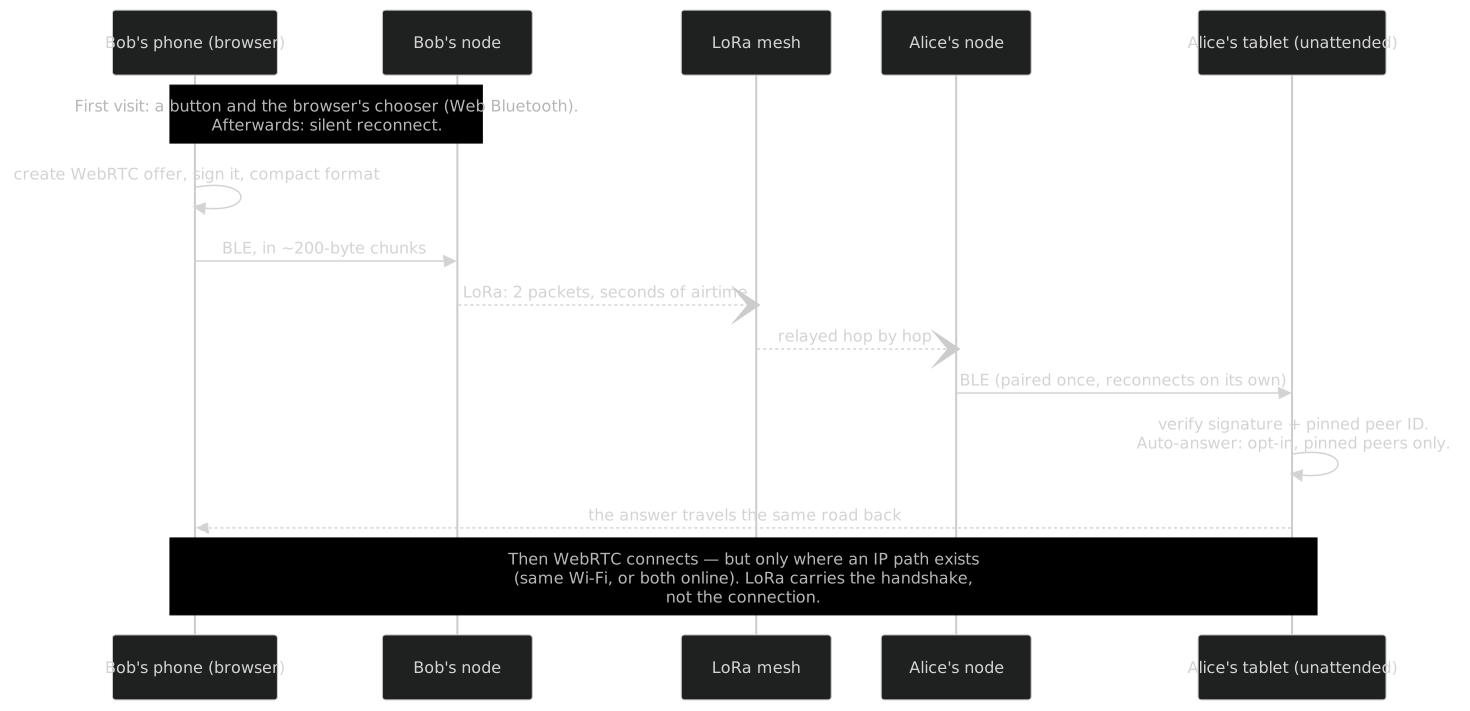
A courier for small, rare, valuable payloads. The signalling handshake from design issue #161 fits in two frames; a single signed event — a booking, a handover confirmation — in a few. Where minutes of latency are acceptable and infrastructure is absent, the model still holds — and metadata that is never generated cannot leak.
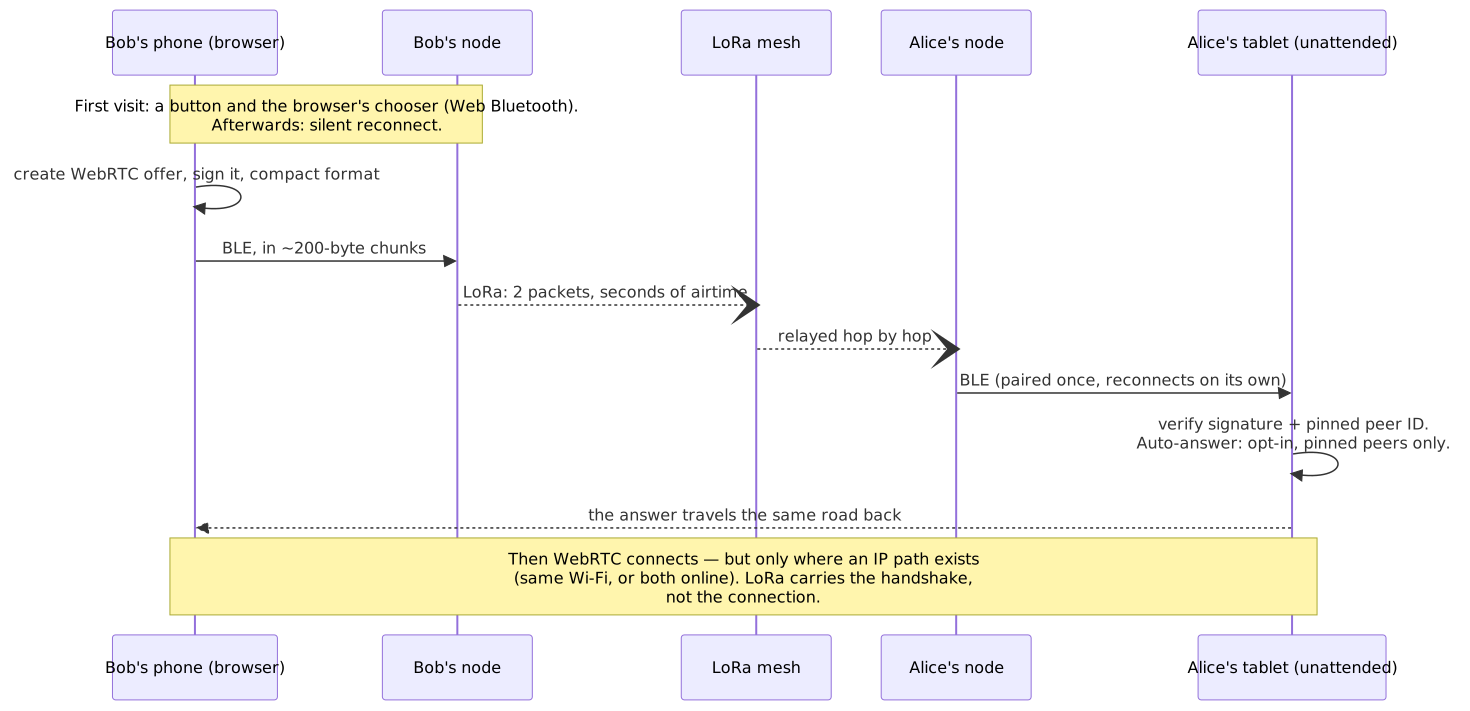
Next, we are building a scheduling example on the leaner Yjs — no access-control lists, no IPFS blocks, a fraction of the airtime. Positioned not as a fallback for internet outages but as an alternative path: a way to synchronise appointments into existing scheduling tools that generates no metadata in the first place.
Technical foundations
- funkpost — the byte courier itself: framing, ARQ and duty-cycle pacing over Meshtastic® radios — data plane built, signalling plane designed.
- webrtc-qr — the library: two devices connect by scanning a code — no signalling server.
- qr01 — the tutorial chapter for this: a todo list moves from phone to phone by scanning a code — over a Wi-Fi hotspot, with no internet involved.
Exchange
We share measurements and the test setup. Anyone working in the same niche — Meshtastic practitioners, researchers, local-first developers — is welcome to get in touch.
Get in touch — contact@le-space.de
On the mesh, we can be reached at le-space.de e45c, YSGs0MrcH9QOcAlIxvYkJWaV64AvKgx/tXS27SiCzXM=
The public key is what identifies us; node names are assigned by whoever operates the node. It radios in the EU-868 region and is mobile — reachable wherever it currently has a mesh in range.
LoRa® is a trademark of Semtech Corporation. Meshtastic® is a registered trademark of Meshtastic LLC. Meshtastic software components are released under various licenses, see GitHub for details. No warranty is provided - use at your own risk. This site is not affiliated with or endorsed by Semtech or the Meshtastic project.